
How AI accelerates parts of drug development
Developments in the pharmaceutical industry are happening quickly – and at AstraZeneca, they are working methodically to accelerate it with the help of AI. The hope is to develop more and better drugs in a shorter time.
Many industries and sectors are undergoing rapid and AI-driven transformation. The pharmaceutical industry is no exception. When Anna Sandström at AstraZeneca, Senior Director in Europe for Social Issues in Research, briefly describes the company's current situation, she uses a telling analogy.
“AI is now moving from being a tool to becoming a partner in drug development,” she says.
So, what does that mean?
To answer the question, we first need to look at the steps that must be taken from the time researchers identify a molecule, receptor or process that needs to be affected, to the time a drug is approved, can be manufactured and sold.
To begin with, an extensive screening of large quantities of molecules is carried out. Then the most promising candidates are tested in preclinical tests, before it is time for clinical development. Then the drug is tested in different phases on humans. Finally, the data from the studies is evaluated by a medicines authority.
AstraZeneca is prepared
By using AI, it is possible to increase both efficiency and productivity in several parts of the process. AstraZeneca was an early adopter and AI is already a crucial part of the company's strategy.
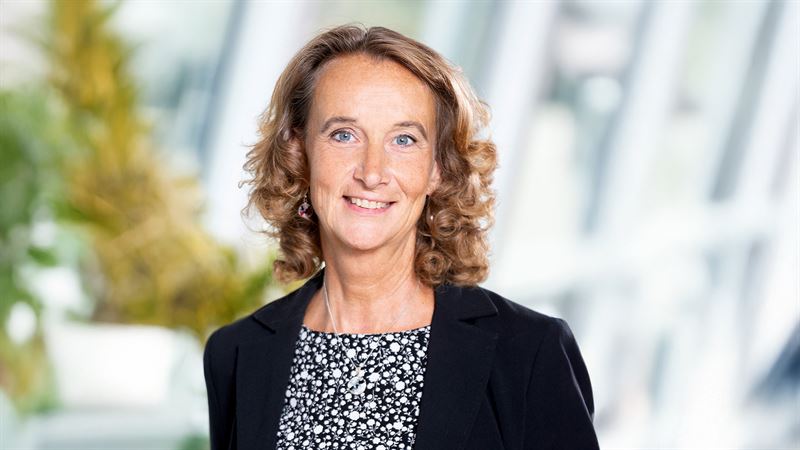
"I would say that there are opportunities to use AI in most of our processes”
Anna Sandström at AstraZeneca, Senior Director in Europe for Social Issues in Research
“We have developed ethical principles that guide how we use AI, and developed a robust governance structure to ensure ethical and safe implementation,” says Anna Sandström.
She continues:
“We have also run pilot projects, which were quickly scaled up when we received proof that the concepts worked. Now development continues at a high pace as we identify new areas where we can streamline operations and increase quality. I would say that there are opportunities to use AI in most of our processes.”
Processing large amounts of data requires enormously powerful computers, so access to computing resources is crucial. In May 2025, a major Swedish investment in AI infrastructure was presented by a newly formed consortium, Sferical AI, consisting of AstraZeneca, Ericsson, Saab, SEB and Wallenberg Investments. Together with the technology company Nvidia, a world-leading manufacturer of advanced AI chips, the company will build an AI factory in Linköping, among other things. For AstraZeneca, the technology enables large-scale AI-driven analysis and the building and fine-tuning of fundamental models in chemistry, biology, safety and clinical data.
Important things are also happening in the AI area at the Mölndal facility.
Here, at one of the company's two largest global centers for research and development, is also the innovation and collaboration hub AstraZeneca BioVentureHub. It functions as an open innovation ecosystem rather than an internal AstraZeneca department. For the first ten years, the hub was a partnership between the public and private sectors, but since last year it has been run entirely by AstraZeneca. Companies that operate here are in one way or another connected to the development of new medicines.
“We want to attract interesting technology and science that may not be quite ready, but where we see potential. Through collaboration, we want to accelerate the development of companies, so that they receive support to grow and succeed, while both parties gain access to new knowledge,” says Robert Roth, Science Director at BioVentureHub.
He adds:
“And AI is a focus area for us.”
AI developers who understand life science
Through BioVentureHub, AstraZeneca can present its challenges and problems and hopefully, regardless of what they concern, find exciting companies to collaborate with. In the AI area, the big challenge is to find those who are both sharp in AI and understand pharmaceutical research.
“There are many companies that are good at AI, often based on large language models. There we are more in the application phase than in the exploration phase. What we are looking for are companies that know enough in our areas to be able to help us,” says Robert Roth.
He continues:
“We need to know which problems can be solved with AI and where we need to place our focus in the development of tools. The combination of those skills is rare.”
So far, not much AI expertise has come into BioVentureHub, but there is an exception: IFLAI.
The company was started in 2022 by three doctoral students from Chalmers University of Technology and the University of Gothenburg, but it was not until the autumn of 2025 that it really started to move. Now the founders are dedicated to the company full-time and in October IFLAI became part of the hub. The business idea is to train AI to achieve high performance with less data, time and energy.
“Large AI models can solve complex problems in drug development, but training an AI to full industrial scale is extremely expensive. But with our method it can be done much more cheaply,” says Henrik Klein Moberg, CTO at IFLAI.
More benefit from fewer calculations
In AI it is common to train a model on large amounts of data by making random selections from the data. What IFLAI does instead is to integrate knowledge in physics into the design of its AI architecture, and its training, and to use so-called agentic active learning.
“We integrate physics knowledge about how the real world works in our AI models long before they see any data. In this way, they do not need millions of data points and thousands of hours of training, but achieve optimal performance from single data points of training,” says Henrik Klein Moberg.
He continues:
“By connecting these two aspects, you can achieve optimal performance. It may be enough to have a single data point.”
AI is, in my opinion, a dream for life science
The strategies that IFLAI develops have the best effect the closer you get to physics. These can, for example, involve microscopy, spectroscopy, spectrometry and X-rays. For a company in the pharmaceutical industry, opportunities open up, for example, in terms of the development of molecules. You can find the right drug candidates faster and at a lower cost.
Now, IFLAI and AstraZeneca have jointly developed an automated process for drug screening, and with its help it will be possible to achieve the same accuracy as with today's tools - but based on a significantly smaller amount of data.
A dream for life science
Robert Roth sees great benefits for AstraZeneca:
“Choosing the right molecules from the start can save us a lot of time, because when the models are reliable enough, we may not need to do as many experiments before the next phase.”
He continues:
“With the help of AI, we can also achieve better clinical prediction, in other words, better understand how a drug works in a patient. We also hope to be able to develop new drugs to treat diseases for which there are currently no good treatments. AI can help us know if we have missed something in the scientific literature or in our own data.
An important task for BioVentureHub is to act as a catalyst, both internally and externally. The aim is to connect people, businesses and companies that may not naturally meet each other, or can access AstraZeneca's expertise, and thereby create the conditions for new knowledge, new ways of working and, in the long run, perhaps new solutions. By introducing AI companies to the hub, everyone gets access to that expertise, and AstraZeneca also offers mentorship and shares expertise, experiences and networks.
Henrik Klein Moberg says that the collaboration with AstraZeneca was the reason why IFLAI applied to BioVentureHub - and that the exchange has been even better than we dared to believe.
“We collaborate around molecular development, IT and manufacturing. The BioVentureHub opens up new opportunities and our technology has more areas of application than we imagined. AI is, in my opinion, a dream for life science. The pharmaceutical companies that excel most in AI will lead the development of the future.”
Advantage Gothenburg
The openness and opportunities for collaboration that Henrik Klein Moberg describes do not only apply to BioVentureHub. Immediately south of AstraZeneca's research facility in Mölndal is GoCo Health Innovation City, a life science cluster that has attracted and continues to attract expertise, investments and international players in health, medicine and biotechnology.
“GoCo is rapidly changing the life science cluster in Gothenburg. The critical mass of companies is growing in our immediate environment, which increases the opportunity to exchange ideas and attract talent. Here is an ecosystem where life science companies can collaborate, grow and develop,” says Robert Roth.
He continues:
“The fact that Gothenburg is not that big can also be an advantage. We understand that we have to help each other and there is a strong desire to collaborate to develop the life science environment. The proximity to Sahlgrenska University Hospital is important and we cooperate with the incubators that are linked to the research environments. Chalmers Ventures, GU Ventures and Sahlgrenska Science Park are the first step for innovations from academia, and we are interested in entering the next step, when the companies know which product they want to develop and are about to move out.”
Gothenburg has a long tradition of openness and co-creation, which becomes a unique strength precisely in the meeting between AI, life science, healthcare and industry, explains Kristina Levan. She is responsible for the work of developing the Gothenburg region's business strategy in life science.
Gothenburg has the chance to become a leader in bioconvergence, which creates the conditions for even faster innovation, better use of data and ultimately new, groundbreaking solutions for patients.
“The city can play a particularly interesting role when these four key actors are now approaching each other and developing together. Here is an environment where advanced research, clinical operations and technology are accustomed to meeting in practice - from global companies such as AstraZeneca to startups and academia,” says Kristina Levan, business developer at Business Region Göteborg.
“Gothenburg has the chance to become a leader in bioconvergence, which creates the conditions for even faster innovation, better use of data and ultimately new, groundbreaking solutions for patients.”
Benefits along the entire development journey
To return to AstraZeneca – and AI on a broader level – the company has developed a new research tool in collaboration with UK Biobank that is based on machine learning based on data sets from 500,000 participants.
“The AI model can assess and identify whether individuals are more likely to have and be diagnosed with specific diseases, and it was able to predict over a thousand diseases before diagnosis,” says Anna Sandström.
“This type of research tool allows us to better understand, for example, which patients are likely to get a disease, which ones can respond to treatment and which ones should be included in a clinical trial. If you can train your AI tools on high-quality data, new doors open for precision medicines built on AI-identified information about biological mechanisms behind diseases.”
In almost all of AstraZeneca's small molecule projects, where innovative classic pills are designed, researchers use AI in their work. In the next step, AI-based digital twins, machine learning, process simulation and robotics have contributed to significantly higher productivity and significantly shorter lead times in the company's production in Södertälje.
Another area is the ability to find the target molecules in the body that should be affected to make a big difference for patients.
“With AI, we can more easily identify target molecules, which means that steps that previously took months can now be completed in just a few days,” says Anna Sandström.
She concludes:
“A lot is now falling into place. Thanks to new methods and technologies in areas such as multiomics, we are learning so much more about the fundamental biological mechanisms behind disease, while our toolbox for treating diseases is growing, for example with methods such as RNA and cell therapies, so that we can choose the best type of treatment to develop for a specific patient group. Then we have AI, as the icing on the cake. Overall, it enables even better treatment results – as well as the conditions to help where there are currently no good solutions.”
Contact
-
Kristina Levan
Business Developer Contact me about: Life Science, Cluster development -
Iris Öhrn
Investment Advisor Contact me about: Establish and invest, Life Science
Related content
Life science in Gothenburg
Gothenburg is a driving force behind Sweden's growing life science sector. New companies, infrastructure and collaborations are shaping new opportunities.
Read more about Life science in Gothenburg7 life science trends
Rapid progress in precision medicine is reshaping healthcare. Digitalisation, AI, and advanced therapies are creating new value for both companies and care providers – and ultimately helping people live healthier, longer lives. Explore seven trends now shaping the life science sector.
Read more about 7 life science trendsGothenburg's life science stories
Read more about Gothenburg's life science storiesLife science news and stories
West Sweden steps up its life science ambitions
Many of the key ingredients for a thriving life science sector are already in place in West Sweden, with significant untapped potential still to be realised. Now, leading organisations from industry, academia and the public sector are joining forces to unlock that potential.
Gothenburg looks to strengthen ties with Germany
Germany has long played a key role in Gothenburg's international business landscape. This autumn, Business Region Göteborg will be at five major events in Germany, helping to forge new business connections and create opportunities for collaboration and investment.
West Sweden aligns efforts to strengthen Swedish life science
The life science sector in Gothenburg is experiencing a period of strong growth and expansion. Now, leading private, academic and public stakeholders are setting a joint direction forward by establishing a common council to accelerate development. West Sweden, with Gothenburg as its regional capital…